Large public events such as sporting tournaments, political summits, and cultural festivals can attract tens of thousands of people. For emergency planners, preparing for potential chemical, biological, radiological and nuclear threats is a critical responsibility.
CBRN simulation training helps responders practise how to detect and interpret hazardous threats in realistic scenarios without exposing teams to real danger.
When seconds matter, realistic simulation prepares teams to make confident decisions under pressure.
Behind the scenes, though, emergency planners are thinking about much more than crowd control. Among the risks they need to prepare for are chemical, biological, radiological, and nuclear (CBRN) incidents. These events are thankfully rare, but they present a tricky challenge: responders might have only seconds to interpret detector readings and decide what to do next.
That kind of decision-making isn’t something you pick up from a handbook. It comes from experience and exposure to realistic scenarios.
What is CBRN Simulation?
CBRN simulation is a training method that recreates chemical, biological, radiological and nuclear threats using safe simulated sources.
These systems allow emergency responders to train with their operational detection equipment while instructors control simulated hazards. The result is realistic training that improves detector interpretation, decision making and coordination during complex incidents.
The Challenge of Realistic Training
Training for CBRN response has always faced one practical problem: making it feel real.
Teams need to understand how their detection kit behaves in the field, how readings change with distance, how shielding affects sensors, and how quickly conditions can shift. But using actual hazardous substances during exercises simply isn’t feasible in most environments.
→ Related Read: 9 scenarios for realistic chemical warfare agent training
How CBRN Simulation Replicates Real Detector Behaviour
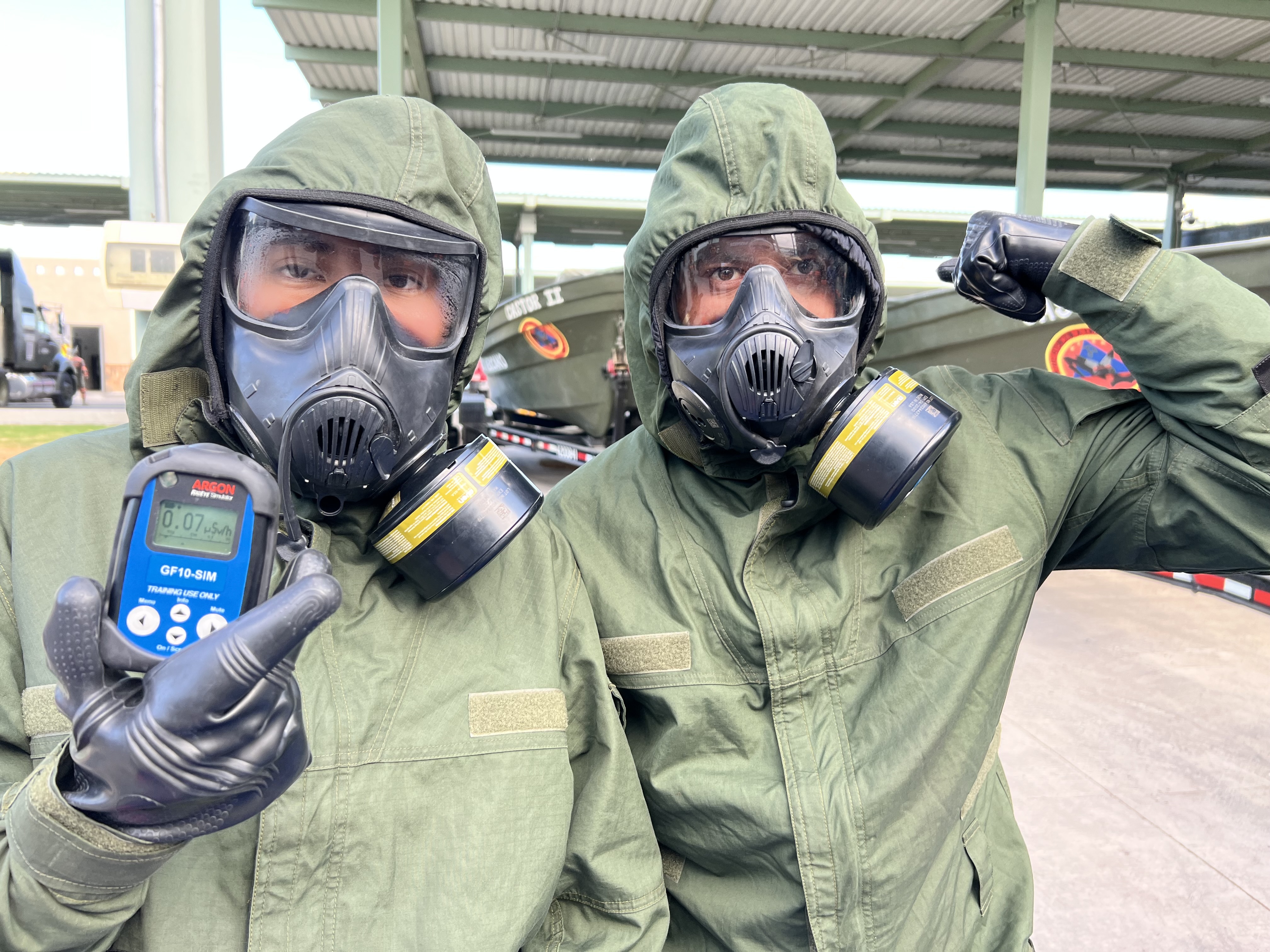
At Argon Electronics, we develop training systems that allow responders to use their real detectors while facing simulated chemical agents or radiation sources. The detector reacts as though it’s sensing a genuine hazard, but without any danger to people or property.
That subtle difference makes a big impact on how exercises feel. When detectors behave realistically, trainees act differently. They check readings more carefully, move cautiously, communicate clearly, and begin to think as they would in an actual incident.
Training for Multi-Agency CBRN Response
Major events rarely rely on a single team. Police, fire services, medical units, and specialist CBRN teams often have to work together.
Training needs to mirror that complexity. Argon’s simulation platforms can introduce multiple hazards, conflicting readings, or shifting contamination zones. Wide-area systems let instructors run dynamic exercises across large venues, observing team movements and reactions as scenarios unfold. Afterwards, instructors can go over what worked, what slowed things down, and how teams handled pressure in the moment. Often, the real learning happens there.
How Simulation Builds Responder Confidence
Technology is important, but confidence is just as critical.
If a detector alarms mid-operation, hesitation can waste precious time. Responders who’ve trained with realistic scenarios are far more comfortable interpreting readings and acting quickly. For teams responsible for protecting large events, or dealing with industrial incidents or city emergencies, that familiarity can make all the difference. Because when a detector flags something unusual, it shouldn’t feel like the very first time they’ve seen it.
See How CBRN Simulation Improves Real-World Training
Realistic CBRN simulation is already helping emergency responders improve their operational readiness.
In a recent training programme, police teams used simulation systems with their operational detection equipment to practise identifying hazardous substances and responding to simulated threats. By recreating realistic detector behaviour and changing hazard conditions, instructors were able to run complex exercises that closely reflected real incidents.
The result was more confident responders, improved decision making under pressure, and better coordination between teams.
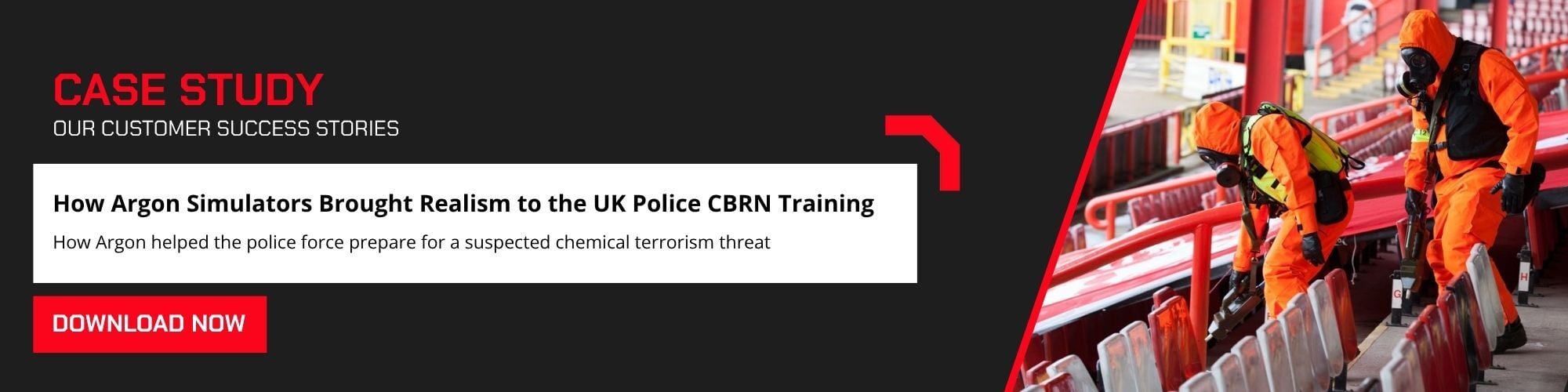
You can explore how this approach works in practice in this case study:
How simulators improve police CBRN and HazMat training.