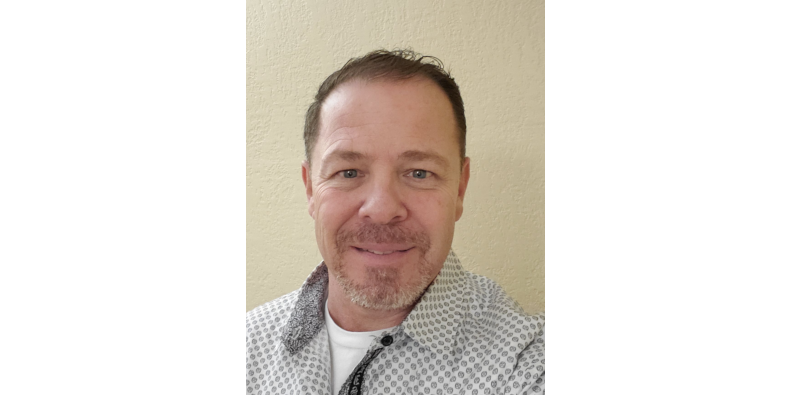

Former head of the Federal Bureau of Investigation's (FBI) National Security Branch joins Argon to help response teams train against the threats they will actually face
Argon Electronics has appointed Jill Sanborn as a strategic advisor. Sanborn retired from the Federal Bureau of Investigation (FBI) as Executive Assistant Director of the National Security Branch, the part of the Bureau responsible for counterterrorism, counterintelligence and weapons of mass destruction programmes.
For more than three decades, Argon has built detector simulators that allow military chemical, biological, radiological and nuclear (CBRN) units, fire and hazardous materials (HazMat) teams, police and explosive ordnance disposal units and national response organisations to rehearse on the instruments they carry operationally, without radioactive sources, chemical warfare agent simulants, or the risk of damaging equipment that has to stay serviceable. That range now covers chemical warfare agent and HazMat simulators, radiation simulators, wide-area live exercise systems and tabletop and virtual training.
Sanborn's appointment is intended to sharpen what Argon builds and how it supports the teams that use it. She has spent her career on the other side of that relationship, deciding what capability national response organisations need and then defending those decisions to the people who fund them.
What this means for the teams Argon works with
Simulators that keep pace with the threats teams are being asked to answer. Radiological dispersal risk, chemical incidents in dense urban environments, opioid and fentanyl exposure during routine calls, and hazards delivered by uncrewed aerial systems all change what a HazMat technician or CBRN specialist needs to rehearse. Sanborn spent 24 years assessing threats of this kind and briefing national decision-makers on them. Her input will shape which detectors Argon simulates next and which scenarios its systems need to support, so that training officers are equipping their people for the incident that is coming rather than the one that has already happened.
Help winning the argument for training budget.
Most training officers already know their teams need more repetitions. The difficulty comes in the meeting where that has to be argued in front of a chief, a commander, a programme manager or a contracting officer weighing it against operational equipment, overtime or vehicles. Grant submissions get scored against criteria the applicant rarely gets to see. Sanborn has written, defended and funded capability requirements at national level, including in front of Congress and the National Security Council, and she knows what makes a case survive that scrutiny and what gets it cut. Argon will use that experience to build the evidence customers can take into those rooms: cost per repetition set against live source training, readiness measures a funder recognises, and language that maps to how capability requests are actually assessed.
Stronger multi-agency exercises.
Large CBRN and HazMat incidents come apart at the seams between fire, police, explosive ordnance disposal, military and medical teams, and that is the part most organisations get to rehearse least often. Sanborn built her career in Joint Terrorism Task Forces, where interagency coordination is the daily problem. Her advice will inform how Argon supports wide-area exercise design through PlumeSIM and PlumeSIM-Smart, so that agencies running joint exercises get more out of the systems and scenarios available to them.
A louder voice for training standards across the responder community.
Sanborn is a visiting fellow at the National Security Institute at George Mason University's Antonin Scalia Law School and a regular commentator on national security risk. Argon expects her to contribute to the wider conversation about preparedness standards, exercise frequency and how readiness is measured. That conversation reaches beyond Argon's customers and into the organisations that set training policy.
Closer working with United States response organisations.
Argon has a strong customer base across United States federal, state and local response organisations, and requirements there move quickly. Sanborn's standing among those organisations shortens the distance between what teams on the ground need and what Argon builds, so that changes show up in the products rather than only in the sales conversation.
Sanborn will also support Argon's leadership on enterprise risk and geopolitical exposure as the business scales within the Evallic group.
Background
Sanborn joined the FBI in 1998 as a special agent in the Phoenix Field Office and moved into counterterrorism work in 2001. She deployed with the Counterterrorism Division's Fly Team to Iraq, Saudi Arabia, the United Kingdom, Kenya and Pakistan, and was later detailed to the Central Intelligence Agency's Counterterrorism Center as acting deputy director for law enforcement.
In 2015 she was appointed assistant special agent in charge in the Los Angeles Field Office, where she oversaw the FBI response to the San Bernardino attack. She subsequently led all FBI field operations across Minnesota, North Dakota and South Dakota, before becoming the first woman to serve as Assistant Director of the Counterterrorism Division, and then Executive Assistant Director of the National Security Branch, where she led a global workforce of 8,000 people and managed an operating budget of $330 million.
After leaving the FBI, Sanborn built and led Roku's geopolitical strategy and risk programme, applying national security methodology to commercial risk management.
She received the 2022 Meritorious Presidential Rank Award, the Central Intelligence Agency's George H.W. Bush Award, and a Department of Defense Joint Civilian Service Commendation Award. She holds a bachelor's degree in business administration in finance from the University of Portland.
"The teams we work with are judged on what they do in the first few minutes of an incident, and that comes down to how many times they have done it before.
Everything we build is aimed at removing the things that stop them practising: source licensing, storage, transport, and instruments that cannot be spared from operational duty.
Jill has spent her career deciding what national response capability should look like and then having to pay for it. Having that view inside our conversations makes us better at building what these teams actually need."
- Bob Cargill, Chief Executive Officer, Argon Electronics