About the author
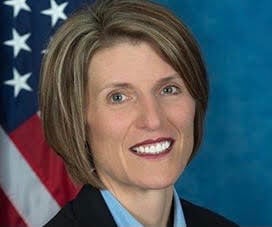
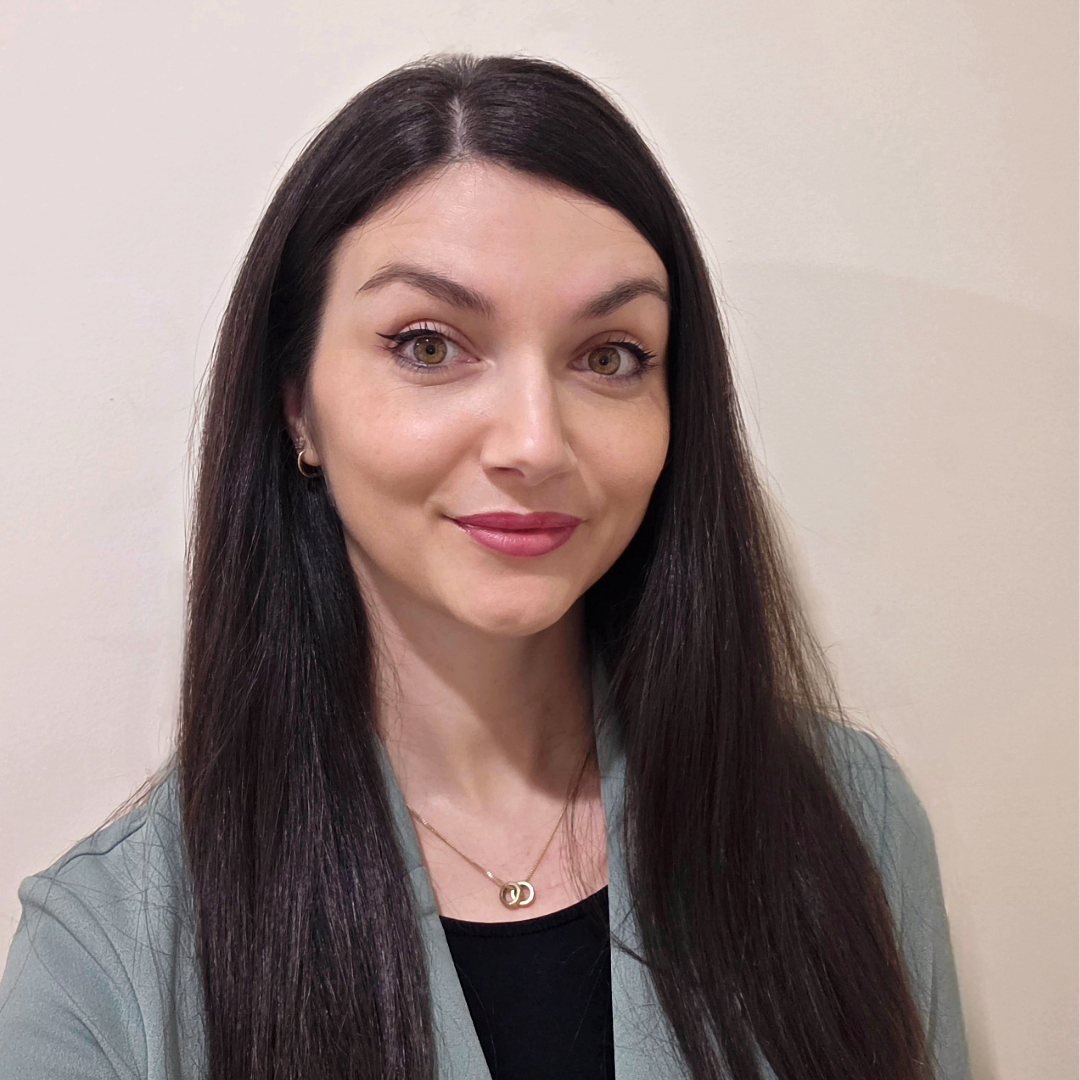
Jill Sanborn is an experienced leader in both the public and private sectors. Her most recent role was Senior Director of the Geopolitical Strategy and Risk program at Roku. She brings nearly 24 years of experience at the Federal Bureau of Investigation (FBI), where she served as the Executive Assistant Director of the National Security Branch.
The Time to Prepare Is Before We Need To
Intelligence leaders around the world continue to highlight an important reality: we are operating in an increasingly unpredictable and complex world. From cyber threats and hostile state activity to terrorism, sabotage and the manipulation of information, the risks facing organizations and communities are evolving constantly.
Additionally, the emergence of AI brings enormous opportunities, but it also creates new vulnerabilities. In October, the head of MI5, Sir Ken McCallum, gave his annual account of the threats facing the UK. MI5's state threats caseload has quadrupled in ten years, and it now puts more resources into state threats than it did during the Cold War. [S1]
For anyone who works in chemical, biological, radiological and nuclear (CBRN) response, one sentence in his speech may resonate more. He listed the ways AI is already being misused, then turned to the one he worries about most: its potential to change the stakes on bioweapons, existing or new. [S1]
The threat posed by biological weapons and the deliberate or malicious misuse of biological science reinforces the importance of strong safeguards, intelligence, surveillance, and preparedness.
In his words:
"We've caught terrorists seeking to exploit AI to improve their reconnaissance and attack methodologies, with AI-enabled drones adding a new twist. Not yet realised – but the misuse case to which I'd attach greatest weight – is AI's potential to change the stakes on existing or even new bioweapons. These risks are real." [S1]
I spent my career in the FBI, and I have sat through a lot of threat briefings. Two things about that sentence stand out to me.
The first is "not yet realised". He is not describing an attack in progress. In the same speech he described himself and his organization as hard to alarm. He was careful, and we should be too.
The second is who said it. When someone who is hard to alarm tells you which risk he weighs most, and tells you it has not arrived yet, he is handing you something rare in this business. He is handing you time.
The question is what we do with the time. The time to prepare is before we need to.
Too often, preparation is something we turn to when a threat becomes immediate, or when an incident has already happened. Effective preparedness is the work done beforehand. It means understanding our vulnerabilities, recognizing potential threats, testing our response plans and making sure people know what to do when the unexpected happens. Perhaps the biggest takeaway is that we should not wait for the warning signs to become impossible to ignore.
Being prepared is not about expecting the worst; it is about ensuring we are ready for it.
What we have seen
In the United States, the FBI said the man who bombed a fertility clinic in Palm Springs in May 2025 used an AI chat program to research explosives. [S2] In the UK, the Southport attacker was charged with producing ricin, a biological toxin, and later admitted it. [S3] In November 2025 a man from East Yorkshire, convicted at Leeds Crown Court, was found guilty of terrorism offenses after writing out attack plans and instructions for making mustard gas. [S4]
So, two things are on the record. People with violent intent are using AI to plan. And people with violent intent are reaching for toxins and chemicals. What nobody has put on the record is the two coming together in a biological attack.
Why a biological attack breaks the usual model
Most emergency response is built around a scene. A tanker overturns, a container leaks, an alarm sounds. There is a place to go, a source to find and a cordon to set. Responders train for that and they are good at it.
A covert biological release gives you none of it. There is no plume, no alarm and no scene. The first sign is people falling ill, days later, in different places, with symptoms that look like something ordinary. The first responder is not a firefighter in a suit. It is a family doctor, an emergency department clinician or a laboratory scientist who thinks, "this is not right".
The anthrax letters of 2001 are a good example. They killed 5 people and made 17 more ill. [S8] The first victim was a 63-year-old man admitted to a Florida hospital on 2 October with fever and confusion. Two days later the state laboratory confirmed anthrax from a culture of his spinal fluid. It was the first case of inhalational anthrax in the United States since 1976, and it was found by a clinician and a laboratory, not by a sensor. [S9]
What happened next is the part I would ask every responder to study. Health officials at first believed that sealed envelopes would not release spores. That was a reasonable working assumption, and it was wrong. Between 19 and 21 October, four workers at the Brentwood mail facility in Washington were hospitalized with inhalational anthrax. [S10] Testing and preventive antibiotics at Brentwood began on 21 October, two days after the first of them was admitted. [S11]
Nobody in that chain was careless. They were making decisions with incomplete information.
What being ready looks like
- Train people to recognize, not only to respond. Nothing in the response starts until somebody recognizes what they are looking at.
- Exercise the decisions, not the drill. Many exercises test whether people can follow the plan when the scenario is clear. Real incidents are not clear. A useful exercise gives people partial information, conflicting reports and a plausible wrong answer, then watches what they decide. It should also test whether the most junior person in the room can be right and be heard.
- Build the relationships before you need them. The FBI has WMD coordinators in its field offices. Much of their work is outreach: getting to know the laboratories, universities and biotech firms on their patch, so that when one of them sees something odd they know who to call. [S16] The Bureau calls it staying "left of boom". The same goes for local agencies. A force that attends three resilience meetings in two years will meet its partners for the first time on the worst night of their careers.
- Challenge our assumptions. Actively seek out alternative explanations and consider information that may contradict initial assessments.
- Repeat it. A review of simulation training in emergency medicine found skills improved straight after training and had declined significantly three months later. [S17] One good exercise a year is not preparation. Short, regular practice is. The debrief matters as much as the exercise: a study pooling 46 samples and 2,136 participants found that debriefs improved performance by about 25%, and that a debrief led by a facilitator was roughly three times as effective as one without. [S18]
Two honest caveats. Much of the research on training comes from clinical settings, not from CBRN operations, and I have found no robust study showing that one training method or technology beats another. What the evidence does support is realism, repetition and a proper debrief. How you deliver those is a choice for each organization.
And this cannot sit only with government agencies or specialist teams. McCallum made the same point in his speech: everyone has a stake in national resilience. The first person to notice something wrong in a biological incident could be a nurse, a postal worker, a laboratory technician, or a member of the public. Awareness, communication, collaboration, and a willingness to challenge assumptions are part of the response.
What I saw for myself
In the FBI, mid-level leaders are required to attend training to prepare them to handle critical incidents. I'll never forget attending that course, AFTER I led my first incident – the 2015 terror attack in San Bernardino, California. During the course I shared with my colleagues a case study on San Bernardino and the lessons learned. A colleague who was attending stopped me in the parking lot to discuss further as he really wanted to prepare himself. Little did we know that within days he would be responsible for leading the response to the attack at the Pulse nightclub in Florida. He often shares how important the training was, how lucky he was to have attended BEFORE having to lead an incident response.
Being prepared is not about expecting the worst; it is about ensuring we are ready for it.
The time to prepare
The real value of preparation is not preventing every incident. Some threats cannot be entirely avoided. Its value lies in reducing the impact, staying resilient, and making sure that when something does happen, we can respond with confidence.
The head of MI5 told us which risk he weighs most heavily, and that it has not yet arrived. He said he gave his overview to encourage preparedness, not to provoke anxiety. I am lucky to have worked with him and take him at his word. We should not wait for the warning signs to become impossible to ignore. The time to prepare is before we need to.
Ultimately, preparation is an investment in resilience. And in a world where the nature of threats continues to change, the question is no longer whether we can afford to prepare, but whether we can afford not to.