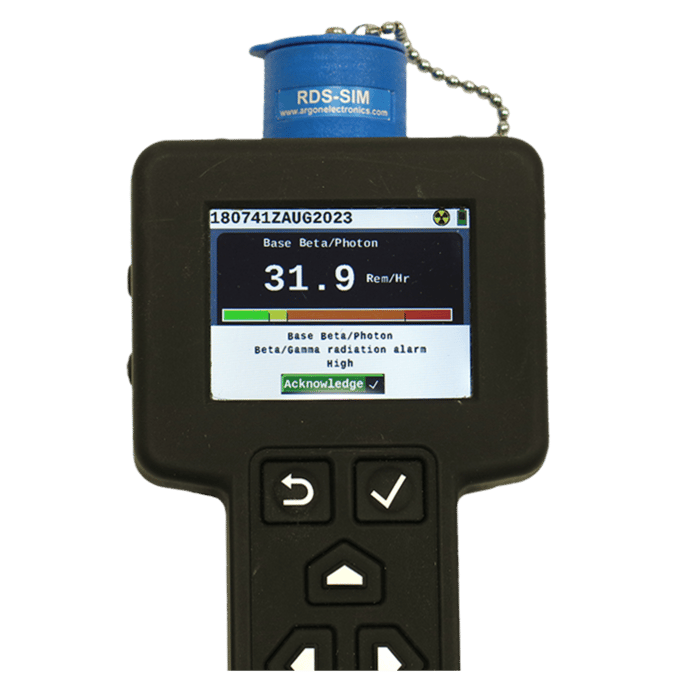
RDS-SIM: Training Simulator for the RDS AN/PDR-83
The RDS-SIM replicates the operational behaviour of the Ludlum Measurements Radiological Detection System, designated AN/PDR-83 in United States military service. Teams train on detector response, alarms and probe handling without ionising gamma or beta sources. The simulator reproduces what the instrument does in the field, so operators arrive at a real radiological or nuclear incident already familiar with the controls, the readings and the decisions those readings drive.
Why Choose the RDS-SIM
Exercises run on safe electronic simulation sources representing gamma and beta signatures. That removes the licensing, storage and health physics controls that come with live sources, while the detector still behaves the way it behaves on task.
The simulator mirrors the operating logic, alarms and probe interactions of the RDS. Operators train using the same sequence of actions they carry out during a real survey or reconnaissance task.
Training focuses on interpreting dose, dose rate and alarm behaviour under scenario conditions, so teams develop judgement around shielding, demarcation and exposure management.
Fielded RDS units are expensive and accountable. Training on the simulator keeps them out of the hands of trainees, avoids accidental damage, and means the operational kit stays ready.
Key Capabilities of the RDS-SIM
The simulator reproduces GM detector response, beta window behaviour, dose and dose rate functions, alarms and the measurement units used on the fielded instrument.
Simulation probes cover beta photon, alpha beta, sensitive gamma, neutron and FIDLER configurations, so operators practise correct probe selection as well as correct interpretation.
The simulator responds to encoded signals representing specific beta and gamma radionuclides, which means survey technique and detector handling are assessed against a defined isotope rather than a generic reading.
The RDS-SIM supports single-operator drills, team exercises and instrumented wide-area scenarios when integrated with PlumeSIM.
Safe and Flexible Radiation Training
The RDS-SIM responds to safe electronic simulation sources that represent gamma and beta radiation signatures. Training can be delivered indoors, outdoors and in complex operational environments including public spaces and live facilities, because there is nothing radioactive to control, transport or account for.
Developing Critical Radiological Skills
Using the RDS-SIM, instructors can deliver high-quality training in:
- Survey and localisation of radioactive sources
- Isodose rate mapping
- Shielding assessment
- Safe demarcation of contaminated areas
- Inverse square law response
- Dose and dose rate management
- Effects of shielding materials such as brick, wood and glass
These skills are essential for teams using RDS Ludlum Measurements systems during real incidents.
Advanced Simulation with Probes and Sources
The simulator supports encoded signals representing specific beta and gamma radionuclides. When the simulated beta window cover is opened, the RDS-SIM responds to the beta component, which reinforces correct operational technique and exposes the trainee who forgot to open it.
Multi-Detector and Scenario-Based Training
The RDS-SIM can be used with compatible dosimeter, survey meter and spectrometer simulators, enabling multi-detector and multi-isotope training within the same scenario. Chemical hazard releases can also be introduced to support combined CBRN exercises.
Wide area exercises with PlumeSIM
Integration with PlumeSIM allows teams to participate in real-time, instrumented wide area field exercises. This supports table-top and live training for radiological dispersal device scenarios and coordinated emergency response.
Cost-Effective Training for RDS operators
The RDS-SIM runs on the same battery supply as the instrument itself and needs no preventative maintenance or recalibration. Cost of ownership stays low, fielded RDS units stay out of training use, and readiness is maintained.
Who the RDS-SIM Is Designed For
The RDS-SIM is built for organisations that field the RDS AN/PDR-83, including:
- United States Army, Air Force, Marine Corps and Navy units
- Allied and NATO forces holding the system under NATO Stock Numbers
- National Guard and homeland response units
- Emergency response and civil defence organisations
- Nuclear and radiological incident teams
- Military and defence units
- Training centres and academies
- Agencies using Ludlum Measurements RDS equipment
What the RDS-SIM Simulates
-
Both GM detectors
-
Beta window function and response
-
Dose, dose rate and accumulated dose
-
Audible and visual alarms
-
All measurement units used by the real RDS detector
-
Split and dual window operation when simulation probes are connected
Compatible Probes
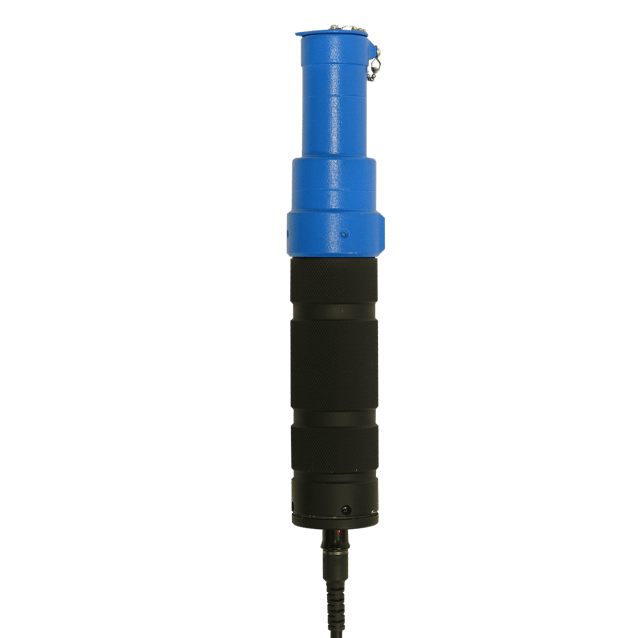
RDS AN/PDR-83 Beta Photon Probe SIM
Connect directly to the RDS AN/PDR-83 base unit to practice remotely monitoring high level radiation sources from a safe distance.
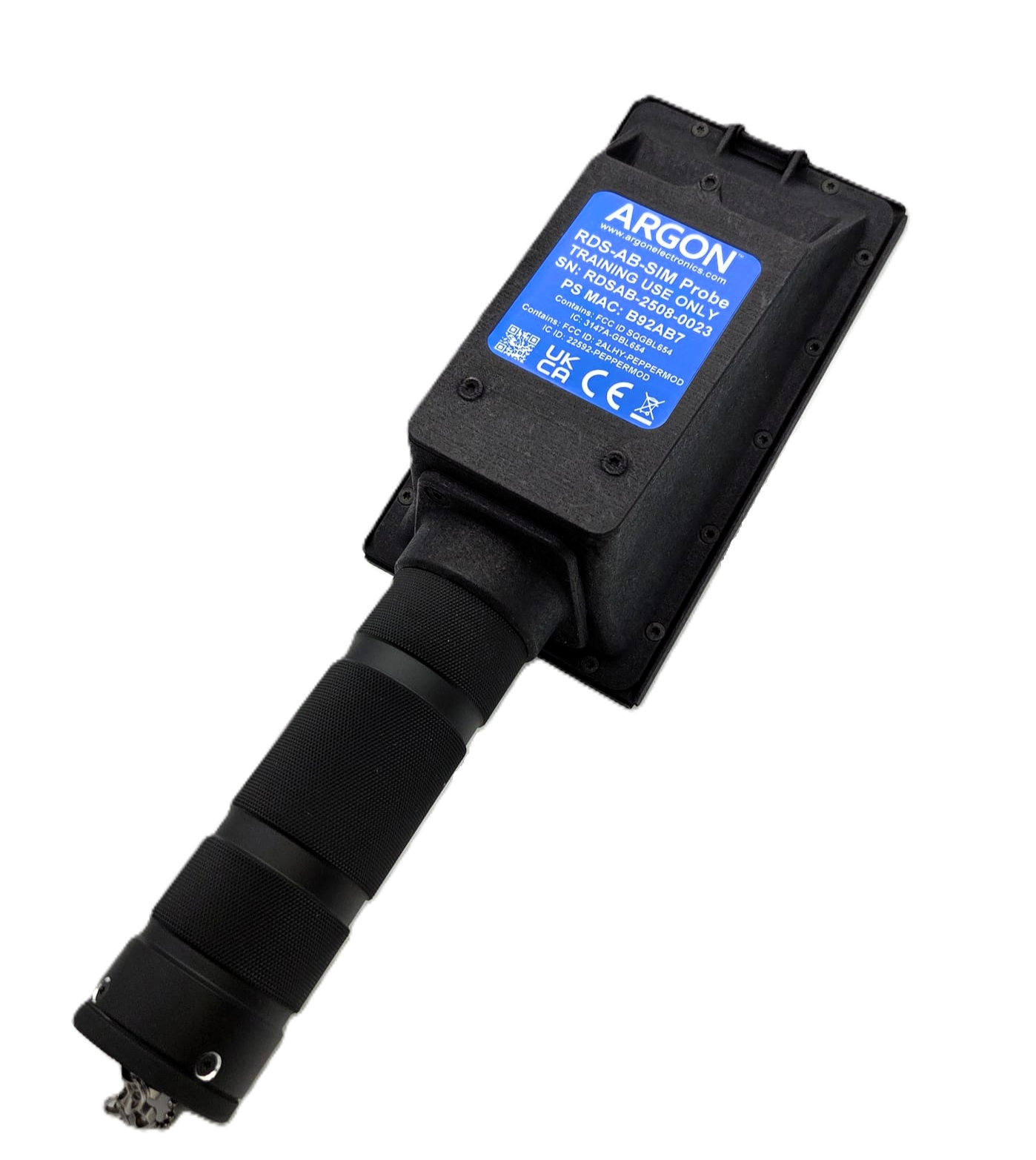
RDS AN/PDR-83 SIM Alpha Beta Probe Simulator
The Simulation Alpha Beta Probe responds to Argon's discreet simulation sources, allowing for highly realistic training in surface contamination, while the easy to use instructor remote permits simulation of partial or full decontamination.
Understanding the RDS AN/PDR-83
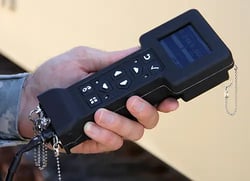
The Radiological Detection System is a portable radiological detection system manufactured by Ludlum Measurements and used for radiation survey, reconnaissance and emergency response. It is built around a base unit with internal Geiger-Muller detectors for beta and gamma measurement, which acts as a common interface for a family of specialist probes.
A United States Department of Defense programme
The RDS was developed after Operation Tomodachi, the United States joint force response to the Fukushima Daiichi nuclear accident, where interoperability between service radiac equipment proved a serious problem. It was adopted as the approved replacement for the AN/PDR-77 and carries the military designation AN/PDR-83.
The system is now fielded across the United States Army, Air Force, Marine Corps and Navy, each with its own technical manual, and is managed through a dedicated United States RDS Program Office. It is available under NATO Stock Numbers, and Canadian forces field their own variant as the Canadian Radiological Detection System.
That matters for training procurement. Where a unit is fielded with the AN/PDR-83, a generic radiation training meter teaches a device the operator will never carry. The RDS-SIM replicates the fielded instrument, which is why it fits alongside a programme of record rather than sitting outside it.
The RDS-SIM reproduces the behaviour, alarms, measurement units and probe responses of the RDS, so that training reflects how the instrument is actually used on task.
Questions Teams Ask About RDS AN/PDR-83 Training
Yes. AN/PDR-83 is the United States military designation for the Ludlum Measurements Radiological Detection System. The two names refer to one instrument, and the RDS-SIM replicates it.
Yes. The simulator is built specifically around the RDS AN/PDR-83, which is the approved replacement for the AN/PDR-77 and is fielded across the United States services and allied forces holding it under NATO Stock Numbers.
Yes. Training scenarios can demonstrate the effects of shielding materials such as brick, wood and glass, supporting realistic assessment of protection measures.
Yes. The simulator is designed to support search, localisation and survey training, including inverse square law behaviour and isodose rate mapping.
Yes. It can be used in multi-detector scenarios with dosimeters, survey meters and spectrometers, supporting coordinated response training.
Yes. RDS-SIM is commonly used for refresher training, procedural validation and advanced exercises, not only for initial qualification.
Simulation probes are available for beta photon, alpha beta, sensitive gamma, neutron and FIDLER configurations, allowing operators to practise probe selection as well as interpretation.
Yes. It works in multi-detector scenarios with dosimeter, survey meter and spectrometer simulators, and integrates with PlumeSIM for instrumented wide-area exercises.
Yes. The simulator is widely used for refresher training, procedural validation and advanced exercises as well as initial qualification.
Request information about RDS-SIM
Submit your details to receive technical information about the RDS-SIM and discuss how it fits your RDS AN/PDR-83 training requirement. A specialist will contact you directly.